You know that incredible feeling you get when two of your favorite people meet and enjoy one another? That’s the feeling that coursed through my veins when I learned that Galileo and John Milton met once. John Milton secured a spot on my favorites list when I first read Paradise Lost in high school. God used his words to till the soils of my hardened soul in preparation to receive the gospel a few months later. Galileo found himself on the same list during the same high school season thanks, in large measure, to the Indigo Girls.
I recently read Dava Sobel’s well-written book Galileo’s Daughter which explores the relationship between Galileo and one of his daughters (a nun in the order of Saint Clare) through years of correspondence. You can imagine my shock when I discovered that the John Milton visited Galileo in his home outside of Florence years after he was condemned by the Inquisition. An aged and unwell Galileo had begun to go blind when a younger John Milton came to visit him during his house arrest.
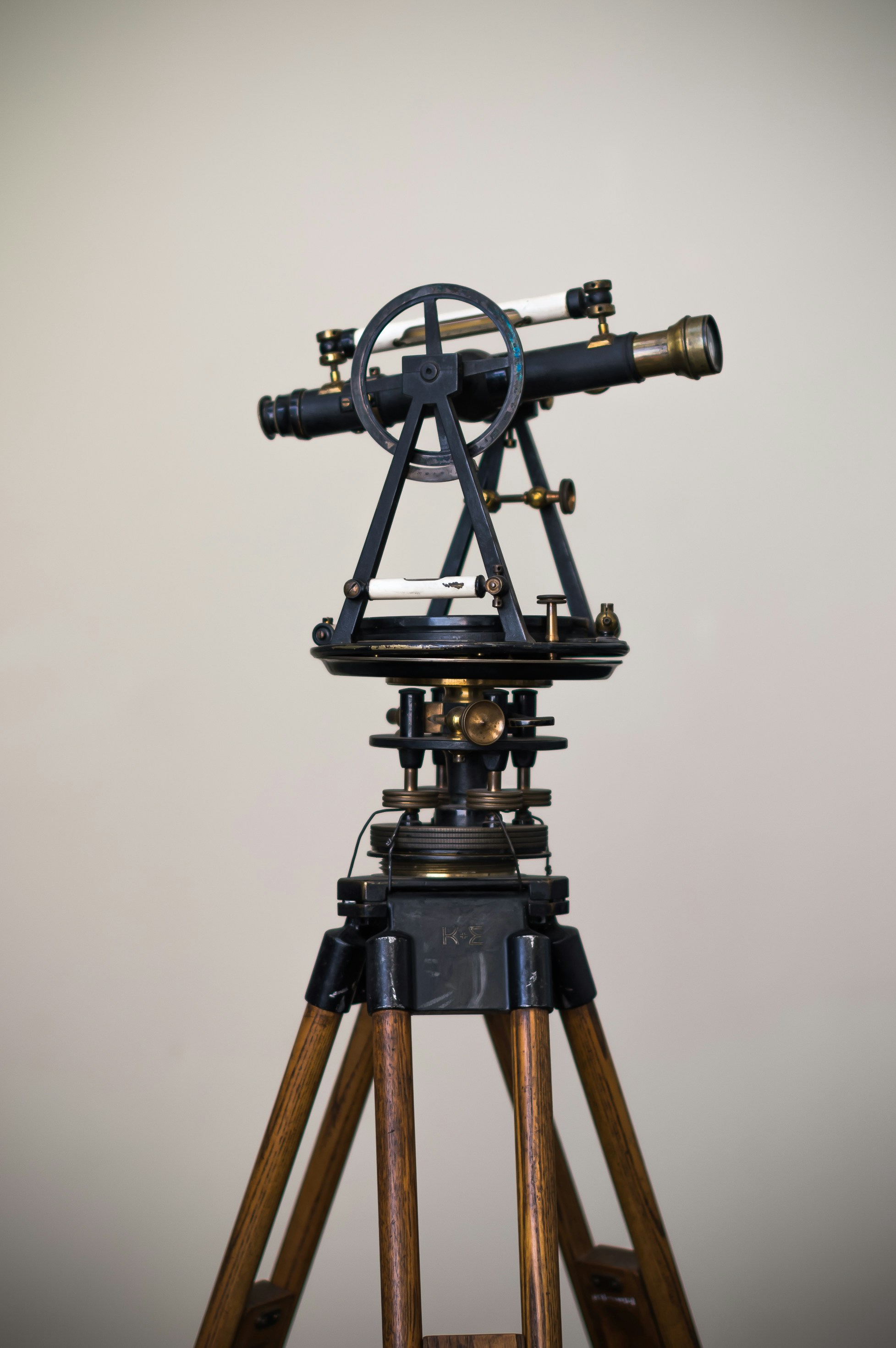
What a meeting that must have been between Milton, an English Protestant who was outspoken against censorship, and Galileo, a devoted Catholic (even after being condemned by the Catholic Church) who had knew censorship firsthand. Galileo, forty-four years Milton’s senior, had chosen to set his gaze on the skies, but what he found challenged long-held and deeply-cherished views of the earth as the center of the universe. Galileo didn’t set out to rock the boat; he simply aimed his telescope and meticulously recorded what he saw. He loved God and respected the church; however, he was convinced that God paid humanity an incredible compliment through intellection by which we were to discover the beauties and wonders woven into creation by the Master Artist. By the time Milton met him somewhere in 1638 or 1639, Galileo’s eyes which had seen too far — it seems for the Catholic church’s liking– had begun to fail him. Milton would share a similar fate, as he slow degeneration of his sight left him completely blind by 1952.
The sight of two of the brightest minds might have gone dark, but their minds stayed sharp: Galileo continued to publish books (wisely and expertly avoiding heliocentrism) even up to his death, and Milton wrote his epic poem Paradise Lost completely blind, dictating his work to his daughters. One had set his sights on the endless horizon of the skies and the other had chosen the limited horizons on the empty page, yet both, through apparent faith, pressed against the limits around them.
They came from vastly different camps and two different generations, but these minds met in a way that seemed to mark Milton in his future writing. I wish I could have been a fly on the wall in that Italian domicile that divinely-appointed day. Did they sing the doxology together after talking about the wonders of the universe that were slowly beginning to be studied in their age of intellectual and spiritual foment? Did Milton later think back on the blinded yet still bright and engaged Galileo when his own lights went out prematurely?
From “When I Consider,” a sonnet that Milton penned about his experience of going blind, we know that he submitted to his lot by faith in God. Had Galileo led not only through his telescopic sight but also through his blindness?
“When I consider how my light is spent,
E’re half my days, in this dark world and wide,
And that one Talent which is death to hide,
Lodg’d with me useless, though my soul more bent
To serve therewith my Maker, and present
My true account, least he returning chide,
Doth God exact day-labour, light deny’d,
I fondly ask: But patience to prevent
That murmur, soon replies, God doth not need
Either man’s work or his own gifts, who best
Bear his milde yoak, they serve him best, his State
Is Kingly. Thousands at his bidding speed
And post o’re Land and Ocean without rest:
They also serve who only stand and waite.”
Did Milton’s own views on censorship take root or deepen while speaking to one so deeply scarred by those using censorship as a punishment and protector of power and position? Did they get into debates about their theological differences? Did the meeting of two such incredible minds help to tear down stereotypes and theological divisions so hardened and exaggerated in the post-Reformation world in which they lived?
I love how Johannes Kepler, a contemporary and correspondent of Galileo, captures the relationship between faith and science: “Science is thinking God’s thoughts after him.” So many centuries later, our society still errs in pitting the two against one another.
Apparently, I’m not the only person fascinated by the meeting of these two minds. Annibale Gatti created a painting seeking to capture such a momentous meeting. I wrote a poem imagining their interaction, mostly because creativity is good for the soul and images our Creative God, the Maker of such minds.
A Momentous Meeting
Benvenuto, giovane amico.
Your visit brings the world into this small room;
The walls sometimes close in even as my eyes close,
But my mind wanders freely on its fixed course–
They can block my words, but they cannot block my mind.
My Maker has given me an instrument that makes instruments–
So they can take it up with Him at their own Inquisitions;
In the meanwhile, I must worship Him.
I entrust to Him the name they smear.
He– the Center– knows the center,
My part is to see, even if I cannot freely speak.
Ciao, Professore.
The Inquisitors, seeking to minimize you, only magnified you in my mind.
We wield different tools, but we seek the same truth.
God will use both telescopes and pens to garner His glory,
Our job is to faithfully tell the story,
Even if that makes us a protesting pair.
I’ve seen further through your gaze,
And I’ll pick up the baton in the form a pen–
Tell me what those eyes saw;
I, “too, want to stand in awe.
Le mei luci lo fanno crescere.
But the Light still shines in the darkness,
And men still receive Him not.
Standing with the Savior,
We are in good company.
Keep seeing and speaking, son.
“The heavens declare the glory of God, and the sky above proclaims his handiwork. Day to day pours out speech, and night to night reveals knowledge. There is no speech, nor are there words, whose voice is not heard” (Psalm 19:1-3).
 aimeejoseph
Leave a comment